
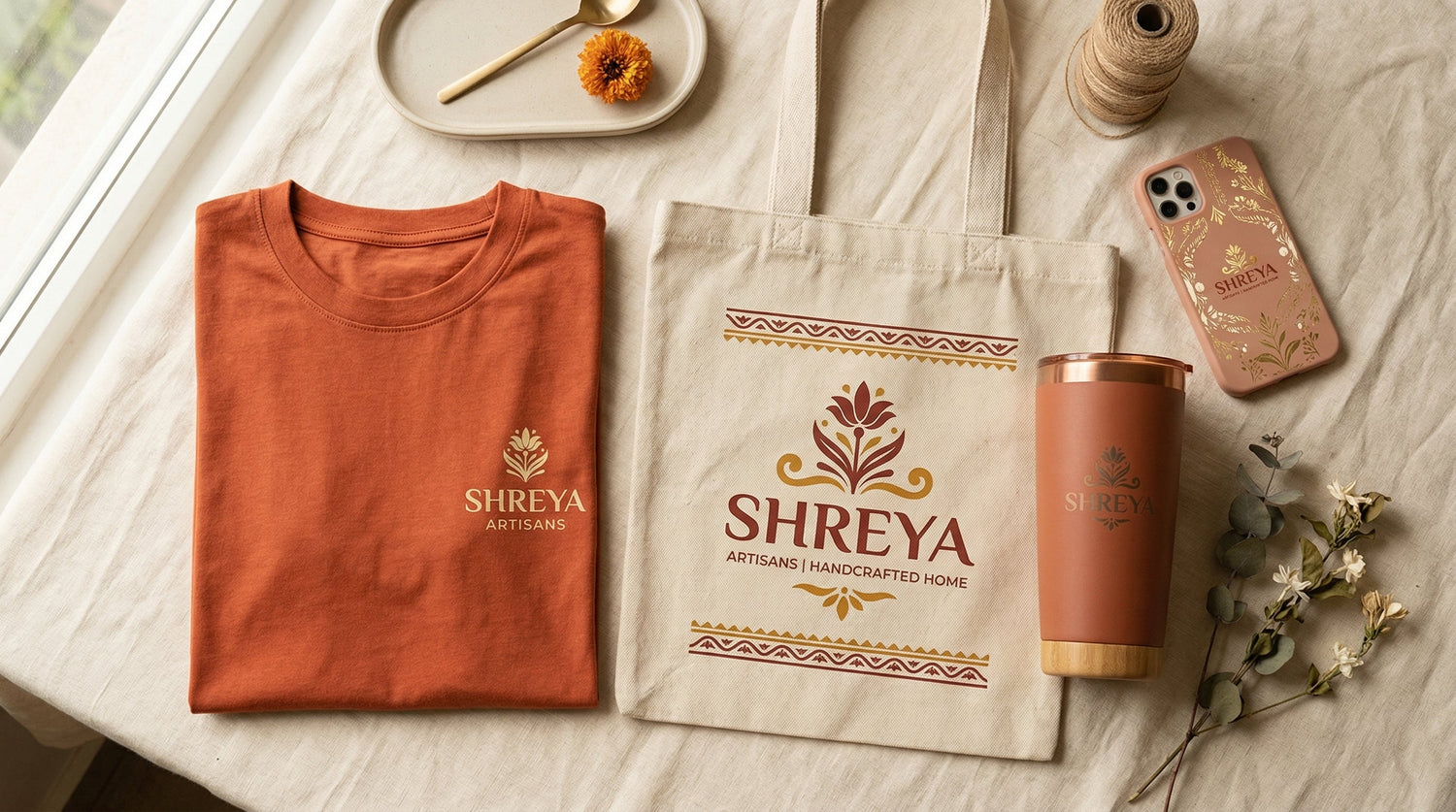
Custom Merchandise for Brands: Everything You Need to Know
Custom merchandise has moved well past the promotional pen and the conference lanyard. When Samsung launches a new Galaxy device in India, when KFC runs a limited-edition campaign, when Sunburn wraps up another festival weekend — the merchandise associated with those moments isn't an afterthought. It's a deliberate extension of the brand, designed to be kept, used, and seen.
Macmerise has produced custom merchandise for brands including Samsung, KFC, PVR INOX, Alan Walker, and Sunburn. This guide covers how branded merchandise works, what's available, and what to consider when planning your own custom merch project — whether it's 50 pieces for a team offsite or 5,000 for a product launch.
What Is Custom Branded Merchandise?
Custom merchandise is any physical product designed and produced specifically for a brand, event, or organisation. Unlike off-the-shelf products with a logo slapped on, genuinely good custom merch starts with the brand's identity and works backward to the product — the design comes first, and it happens to appear on a phone case, a t-shirt, or a hoodie.
The distinction matters. A plain white mug with a logo printed in the centre is promotional material. A well-designed mug where the brand's colour palette, typography, and visual language are integrated into a pattern that someone would actually want on their desk — that's custom merchandise. One gets tossed in a drawer. The other becomes a daily touchpoint with the brand.
According to the Promotional Products Association International (PPAI), 83% of consumers who receive a promotional product can recall the brand on it. But recall without affinity is just awareness. The goal of well-designed merchandise is to create products that people choose to use — not because they're free, but because they're genuinely good.
Product Types Available
Phone Cases
The most personal item most people carry. A branded phone case sits in someone's hand for hours daily and is visible in every meeting, every commute, every social situation. Custom phone cases work across case types — slim designer cases, tough hybrid cases, clear cases with subtle branding, and MagSafe-compatible options. Design possibilities include full-wrap prints, subtle logo placement, pattern designs using brand elements, or limited-edition artwork commissioned for the collaboration.
Apparel
T-shirts, hoodies, sweatshirts, and jackets. Direct-to-garment (DTG) printing has transformed what's possible with branded apparel. Full-colour, photographic-quality prints that don't crack or peel — unlike the screen-printed logos that dominated corporate merch for decades. The key shift: branded apparel now needs to be something people would wear outside the office. If your team hoodie only comes out on casual Fridays, the design needs work.
Drinkware
Tumblers, mugs, and water bottles. These are among the highest-retention promotional products — industry research from ASI shows drinkware generates more impressions over its lifetime than almost any other promotional product category, because people use them daily for years. Custom drinkware with thoughtful design (not just a logo) becomes a permanent fixture on desks and kitchen shelves.
Bags and Accessories
Laptop sleeves, tote bags, backpacks, pouches. Useful items with high visibility — a branded tote bag at a market or airport is a walking billboard, but only if it's designed well enough that the person isn't embarrassed to carry it. The bar for bag design is higher than for most merchandise categories because bags are worn publicly and judged as fashion choices.
Tech Accessories
Wireless chargers, power banks, cable organisers, laptop stands. These combine practical utility with brand presence. A branded wireless charging pad on someone's desk is a subtle, constant reminder of your brand — and unlike a sticker or card, it serves a genuine function. Tech accessories also signal that your brand understands its audience's daily life.
When to Use Custom Merchandise
Product Launches
New product releases benefit from tangible merchandise that extends the launch beyond digital channels. When Samsung launches a new phone, custom cases designed specifically for that device — available from day one — create an immediate accessory ecosystem. Launch merchandise also creates social media content: unboxing photos, "first look" posts, influencer kits. Macmerise's collaboration with Samsung for Galaxy device launches is an example of this approach — cases designed around the device's colour palette and design language, available at launch.
Corporate Events and Offsites
Team offsites, annual meets, conferences, and company milestones. Good event merchandise does two things: creates a sense of shared experience during the event (everyone wearing the same hoodie creates team cohesion) and serves as a lasting memento afterward. The key is to design merchandise that references the specific event — "Q3 Offsite Goa 2026" — rather than generic company branding. Specificity creates emotional attachment.
Brand Activations
Pop-up stores, festival presences, retail experiences. Limited-edition merchandise creates urgency ("only available here") and gives attendees a physical takeaway from an experiential moment. Sunburn festival merchandise, for instance, isn't just fan gear — it's a souvenir of a specific weekend, at a specific place, with specific people. That emotional context transforms a t-shirt from clothing into a memory anchor.
Client and Employee Gifting
Diwali gifts, onboarding kits, client appreciation, milestone celebrations. The corporate gifting market in India is substantial, and the expectation has shifted from generic gift baskets to curated, branded merchandise. A new employee receiving an onboarding kit with a branded hoodie, a custom phone case, and a good tumbler feels like they've joined something, not just signed a contract.
Retail and Resale
Some brands create merchandise as a revenue stream, not just a marketing cost. Artist merch, sports team merchandise, and brand collaborations can be sold at margins that make the merchandise profitable in its own right. This works when the brand has enough cachet that people will pay retail prices for merchandise bearing its identity — think band t-shirts, football jerseys, or artist-branded accessories.
How the Process Works
Step 1: Brief and Discovery
Every merchandise project starts with understanding the brand, the audience, and the occasion. What's the brand's visual language? Who will receive or buy this merchandise? What's the context — a festival, a corporate event, a retail launch? The brief shapes everything from product selection to design direction. A tech startup's onboarding kit looks nothing like a music festival's merch line, even if both include t-shirts and phone cases.
Step 2: Design Development
The design team creates concepts that integrate the brand identity with the product format. This isn't placing a logo on a template. The brand's colours, typography, patterns, and visual personality need to be part of the product itself, not pasted on top of it. Multiple concepts are presented, refined through feedback, and finalised for production.
Step 3: Sampling and Approval
Physical samples are produced for review before bulk production begins. This step is critical because colours, materials, and print quality look different in person than on screen. Sampling catches issues early — a shade of blue that looked right on a monitor but appears too bright on fabric, a logo placement that's slightly off-centre, text that's too small to read comfortably. Depending on the product, sampling takes 3-7 business days.
Step 4: Production
Once samples are approved, bulk production begins. Production timelines depend on the product type and order size. Phone cases and small accessories are typically faster (5-10 business days for moderate quantities) than apparel (7-14 business days), which requires fabric preparation, printing, cutting, and stitching.
Step 5: Quality Check and Delivery
Every batch goes through quality inspection before shipping — print alignment, colour accuracy, material quality, packaging integrity. Defect rates in professional merchandise production should be below 2%. Delivery is coordinated based on the project timeline, whether that's a single shipment to one office or distributed delivery to multiple event venues.
Minimum Orders and Pricing Guidance
Minimum order quantities (MOQs) vary by product type and customisation level:
| Product | Typical MOQ | Price Range (per unit) |
|---|---|---|
| Phone Cases | 25-50 units | ₹400-₹1,200 |
| T-shirts (DTG) | 25-50 units | ₹500-₹1,200 |
| Hoodies | 25-50 units | ₹1,000-₹2,500 |
| Tumblers/Mugs | 50-100 units | ₹300-₹800 |
| Tote Bags | 50-100 units | ₹200-₹600 |
Prices decrease at higher volumes. An order of 500 t-shirts will cost significantly less per unit than an order of 50. Design complexity doesn't significantly affect per-unit cost for DTG printing (since it's digital), but it does for screen printing, embroidery, and speciality finishes.
Budget planning tip: allocate 60-70% of your merchandise budget to the products themselves, and 30-40% to packaging, design, and shipping. Good packaging matters for the unboxing experience and protects the product — it's not an area to cut corners on, especially for gifting.
Timeline: How Long Does It Take?
A typical custom merchandise project from first conversation to delivered products:
- Brief to design concepts: 3-5 business days
- Design revisions and approval: 2-5 business days (depends on feedback cycles)
- Sampling: 3-7 business days
- Sample approval and production start: 1-2 business days
- Bulk production: 5-14 business days (depending on product and quantity)
- Quality check and shipping: 2-5 business days
Total: roughly 3-5 weeks from brief to delivery. This can be compressed for urgent projects (2-3 weeks with rush production) or extended for large-scale orders (6-8 weeks for thousands of units with multiple product types).
The most common source of delays isn't production — it's the design approval process. Internal alignment on brand guidelines, colour choices, and design direction can add weeks if multiple stakeholders are involved. Start the conversation early, especially for date-sensitive events like festivals or launches.
Case Studies
Samsung Galaxy Launches
Macmerise has designed custom phone cases for Samsung Galaxy device launches, creating accessories that complement each new device's design language. Cases are designed around the phone's colour palette and released alongside the device, giving customers premium accessory options from launch day. The designs incorporate Samsung's brand elements while remaining distinct products — branded collaboration, not just logo placement.
KFC India
Limited-edition branded merchandise for KFC India's marketing campaigns. The challenge with food brand merchandise is translating a taste-and-experience brand into physical products people want to keep. The solution: playful designs that reference KFC's visual identity and brand humour without being literal (no one wants a phone case that's just a photo of fried chicken). Pattern-based designs using brand colours and iconography that feel fun and collectible.
Sunburn Festival
Festival merchandise for India's biggest EDM festival. Music festival merch needs to capture the energy of the event while being practical — it's worn in outdoor settings, in crowds, in heat. The designs balance bold, high-energy visuals with wearable colour palettes. Limited availability (only at the festival) creates collector value, and the merchandise becomes a memento that connects the wearer back to the festival experience.
Frequently Asked Questions
Can we use our own designs, or does Macmerise create them?
Both options work. You can provide finished artwork and brand assets for direct production, or the design team can create concepts based on your brief and brand guidelines. Most projects involve collaboration — the brand provides the visual identity and direction, and the design team adapts it for each product format. Some designs that work on paper need adjustment for phone cases or apparel to account for print areas, colour reproduction, and material constraints.
What file formats do you need for artwork?
For best results: vector files (AI, EPS, SVG) for logos and graphics, high-resolution raster images (300 DPI minimum, PNG or TIFF) for photographs. Brand guidelines documents with colour codes (Pantone, CMYK, hex) ensure accurate colour reproduction across product types. If you only have low-resolution files, the design team can often recreate elements — but starting with high-quality source files produces the best output.
Can merchandise be shipped directly to multiple locations?
Yes. For corporate gifting, multi-office distribution, or event logistics with multiple venues, direct shipping to separate addresses is standard. Each delivery can be individually packaged and labelled. For employee gifting, individual orders can be handled through a custom portal where employees enter their own shipping details and select sizes for apparel — eliminating the coordination burden on the ordering team.


Leave a comment
This site is protected by hCaptcha and the hCaptcha Privacy Policy and Terms of Service apply.